
Blog right sidebar

We ensure quality & support. People love us & we love them. Lorem ipsum dolor sit amet, consectetur adipiscing elit.

    2015/10/31
  • BLOG
  • 0 Shares
  • 1750 Views

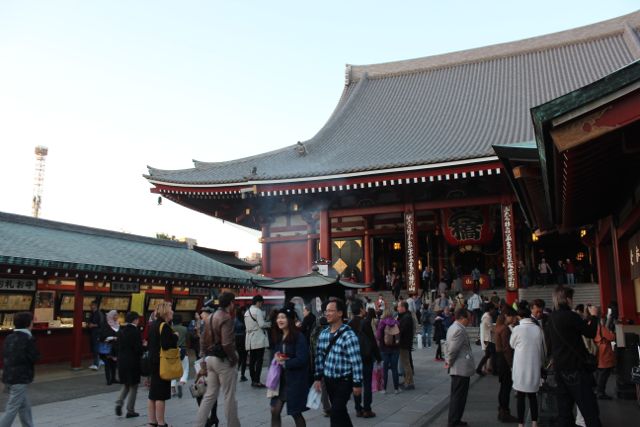
sensoji
The basic actions you have to take in either shrine or temple are similar. First of all, keep in your mind that it is a holly place that you have to show resect. Then as follows.

Step1. Enter the site walking under the gate. Inside the site is regarded as holy.

Step2. Wash your hands and mouth at a place for ritual cleansing. Hold the ladle with your right hand and pour water on your left hand. Do the same with your left hand to clean your right hand. Then hold the ladle with right hand again to wash your mouth.

Only in Temples; After washing hands, you would find an incense burner. Wave your hands over the smoke to clean yourself with the

Read More
    2015/10/30
  • BLOG
  • 0 Shares
  • 1883 Views

Now you understand very basics of Shinto and Buddhism. But as a tourist, how shall you distinguish shrines and temples?

The easiest way is to check the entrance. If it has a gate made from either wood or stone, it should be a shrine. Originally the gate was the entrance of a spiritual zone which separate human world and holy zone.

Stone shrine gate

If it has an incense burner (jokoro), it is a sign of a temple. At the incent burner, people clean themselves with the smoke and its aroma before moving forward. Also, if you find grave stones inside or around, that place is a temple.

[caption id=”attachment_603″ align=”alignnone”

Read More
    2015/10/29
  • BLOG
  • 0 Shares
  • 1598 Views
a gate of shrine, called torii

A red wooden gate of shrine

When you come to Japan, you would visit at least one temple or shrine. There are 76 thousands temples and 88 thousands shrines in Japan. Actually there are more temples and shrines than convenience stores whose number is around 50 thousand.

But what are the differences? First of all, shrine is for Shinto and temple is for Buddhism. Shinto is the oldest religion in Japan and relatively primitive. Its unique characteristic is polytheism believing in many gods and spirits. People believe there are as many as 8 million gods and spirits- people find gods and spirits everywhere, from behind a leave, under a stone, to top of a mountain.

Buddhism

Read More
    2015/10/28
  • BLOG
  • 0 Shares
  • 2299 Views

テーブルセット
What are “itadaki-masu” and “gochiso-sama” in Japanese? If you a fan of Japanese anime, you should have heard the word “itadaki-masu” before a meal and “gochiso-sama” after meal. At home, we Japanese are educated to say those phrases before and after meals and if the children miss to say them, parents would let them say.
Both phrases are originally from religious concept. Itadaku, as a verb, literally means receive in polite expression. Japanese say itadaki-masu before meals to appreciate two things. The first appreciation is for all the people who relate to the cooking- not only cooks themselves but also others such as farmers and clerks of supermarkets. The second appreciation is for lives of all food, not only livestock or fish

Read More