
Blog right sidebar

We ensure quality & support. People love us & we love them. Lorem ipsum dolor sit amet, consectetur adipiscing elit.

    2015/11/4
  • BLOG
  • 0 Shares
  • 1498 Views

Those who live in other metropolitan areas around the globe may be surprised to learn that Japanese subways and commuter trains do not run 24 hours a day. While the time of the last train varies depending on the line, it’s usually between about 12:00 and 12:30AM. The earliest trains the following day will run intermittently starting from about 5:30AM.

As Tokyo is a city with no lack of nightlife, many may wonder why it does not have public transportation to match. If you ask a Japanese person, most will tell you that it’s a cleverly disguised trick to force salarymen to leave the office for the night. Working hours can be grueling, and suspending service for early morning hours functions the same as last call in a bar. Hardworking businesspeople

Read More

    2015/11/3
  • BLOG
  • 0 Shares
  • 1242 Views

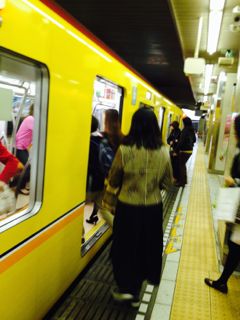
ginza line

Japanese culture is well known for its rules and formality. Whether it’s table manners, business introductions, or after-hours drinking parties, there are unspoken rules for every situation. Riding on the train is no different! Let’s take a look at how the locals are supposed “not” to do.

No talking on the phone
The cardinal rule of Japanese train etiquette is to avoid talking on the phone while onboard. Many new to Japan may be shocked at just how quiet the public transportation is. The fact that the vast majority of passengers respect the phone rule is the major reason. Feel free to speak with your traveling companions, but don’t take or make calls while on board.

Don’t carry backpacks on your back
Japan, and

Read More
    2015/11/2
  • BLOG
  • 0 Shares
  • 1478 Views
Osaka, Dotonbori

Osaka, Dotonbori

While it may not be apparent to short-time visitors, Tokyo and Osaka are very different cities with very different cultures. Tokyoites are known for being reserved, serious, polite, and tend to keep to themselves. Osakans are the opposite – gregarious folks sometimes bordering on raucous. Osaka is the home of many famous Japanese comedians, and the people there are known for their sense of humor. Locals in Osaka are far more likely to start a conversation with you than people in Tokyo.

Beyond this, another curious difference exists between the two cities. In Tokyo and most other Japanese cities, people stand on the left of the escalator and pass on the right. In Osaka and the surrounding region,

Read More
    2015/11/1
  • BLOG
  • 0 Shares
  • 2816 Views
hina dolls

two sets of hina dolls and a kimono

So far, we have seen some visual and historical differences between Shinto and Buddhism. Now let me explain how naturally both Shinto and Buddhism affect on our daily lives and seasonal ceremonies.

At the night of New Year’s Eve, December 31, we usually go to temple to appreciate the lucks of previous year and worship for coming good year. Next morning, on January 1, we go to shrine wishing for a good new year. You may feel this is something very unprincipled. But this is the way Japanese have been. Other religious ceremonies both from Shinto and Buddhism can be observed every season. March 3 is girls’ day, which families with girls

Read More